Do you know how many potential customers you lost this week because your ads chased them like a desperate salesperson?
Probably more than you think. Remarketing is one of the paid media tactics with the best return: people who already know you tend to click and convert far more than a cold audience that has never seen your brand. The numbers are so good that it seems absurd not to use it.
But there’s a problem almost nobody in Colombia is measuring.
Many consumers find follow-up ads annoying when there’s no frequency limit. And when an ad burns someone out, you don’t just lose that sale: you lose the brand. The prospect doesn’t come back, doesn’t recommend you and — worst of all — associates you with “that company that harasses me with the same banner”.
Well-done remarketing is the digital equivalent of a waiter who appears just when you need another beer, not before, not after. Badly done remarketing is the salesperson who follows you for three blocks after you said “no, thanks”.
I’m going to show you how to do remarketing that sells without poisoning your audience. With Google Ads, with Meta Ads and with a channel almost nobody in Colombia is using for this.
The silent problem with intrusive remarketing
Most companies in Colombia set up their remarketing like this: “chase them until they buy”. I understand it, in part. You’re paying for every impression and every click, and instinctive logic says “if I keep showing it, they’ll eventually give in”.
But the data tells a different story.
After repeated exposure to the same unchanged ad, CTR tends to drop sharply. What’s known as ad fatigue doesn’t just make your investment useless: it creates a backlash in which the user associates your brand with a negative experience.
Think about it from the consumer’s side. You visited an online shoe store, looked at a pair and didn’t buy. Three weeks later, that same pair of shoes follows you on every page you visit, in every YouTube video, in every Instagram story. It isn’t that you didn’t like the shoes. It’s that feeling watched is uncomfortable, even when the advertiser’s intention isn’t malicious.
In the Colombian market this is particularly delicate. Trust is a decisive factor for local online shoppers, and ads that “follow” people after they visit a site can easily become a negative factor in the purchase decision rather than just an annoyance.
The real cost of intrusive remarketing doesn’t appear in your Google Ads reports or in your Meta dashboard. It’s an invisible cost made up of:
- Customers who block you: once someone hides your ad or blocks your page, that person is lost to you on that channel for good.
- Negative brand association: your logo stops being “the company that sells X” and becomes “the people who harass me”.
- An inflated CPM with no return: you pay for impressions that not only don’t convert but cost you reputation.
- A penalizing algorithm: both Google and Meta reward relevant ads and penalize those with poor signals (low CTR, high “not interested” feedback), making your future campaigns more expensive.
If you’re spending more than COP 3,000,000 a month on paid media in Colombia and you don’t have a frequency control and intent-based segmentation strategy for your remarketing, a meaningful part of that budget is probably having a net negative effect. Not neutral. Negative.
Ethical remarketing: a framework of 7 principles
I didn’t make this up. After managing hundreds of campaigns for clients such as the Medellín Botanical Garden, the Archdiocese (21 schools) and industrial companies in Antioquia, we developed a working framework that we call “ethical remarketing” internally. It consists of 7 principles that, when applied consistently, keep your brand in the zone of usefulness without crossing into harassment.
Principle 1: Transparency from the first pixel
Your cookie notice can’t be a hidden gray button in size-8 type that says “this site uses cookies”. That doesn’t work anymore — legally or commercially. Under Colombia’s data protection framework, consent must be prior, express and informed.
But beyond the legal side, transparency is a competitive advantage. When a user understands they’ll see your ads after visiting your site — and accepts because the value proposition is clear — that ad won’t bother them. They’re expecting it.
Principle 2: Segmentation by real intent, not by visit
Someone who spent 4 seconds on your homepage and bounced isn’t the same as someone who looked at 5 products, read reviews and almost reached checkout. Treating both with the same remarketing is the definition of wasted money.
Segment your remarketing audiences by depth of interaction:
- Visitors who stayed under 10 seconds: don’t put them into remarketing yet. They need a different type of content, not an offer.
- Visitors who saw 1–3 pages and stayed more than 30 seconds: educational content, a case study, social proof.
- An abandoned cart or a started form: a concrete offer, legitimate urgency, a useful (not desperate) reminder.
Principle 3: Strict frequency caps
This is the one that hurts most to apply because it goes against the instinct of “more impressions = more sales”. But in our experience, the sweet spot is usually between 3 and 5 impressions per user per week, depending on your product’s purchase cycle.
For quick-decision products (ecommerce, urgent services), 3 impressions a week at most. For B2B services or high-value decisions, you can stretch to 5–7, but rotating the creative.
Google Ads lets you set frequency caps in Display and Video campaigns. Meta Ads offers frequency controls depending on the campaign type and objective. If you’ve never touched that setting, assume you’re overexposing your audience.
Principle 4: Immediate exclusion of people who have converted
It seems obvious, but you’d be surprised how many Colombian companies keep showing “buy now” ads to someone who bought two days ago. Nothing tells your customer “I don’t care about you as a person, I just want your money” like chasing them after they’ve already paid you.
Set up automatic exclusions: whoever buys, whoever fills in the form, whoever books the call. They leave the conversion remarketing immediately. They can enter another audience — customers — where they receive loyalty content, useful cross-selling or simply a “thank you” with no offer. But never the same ad.
Principle 5: Value at every touchpoint
Every remarketing ad must answer a question in the user’s mind: “why is this showing up now, and why should I care?”
If your honest answer is “because they visited my site and I want them to buy”, that ad needs rewriting. Every impression should add something: a new fact about the product, a review from another buyer, a comparison that wasn’t on the product page, a use case they hadn’t considered.
Rotating the message isn’t just changing the color of the button. It’s changing the value angle.
Principle 6: Real control for the user
The “not interested” or “stop seeing this ad” button isn’t an enemy. It’s free information about who ISN’T your customer. Celebrate it.
Meta gives you feedback signals on how people react to your ads, and Google gives you signals on engagement and relevance. When negative signals rise, it isn’t the algorithm being mean: it’s your audience telling you to “turn it down a notch”. Listen to them.
What’s more, offering a clear way out reduces user anxiety and, paradoxically, increases the likelihood that those who stay will convert.
Principle 7: Measure fatigue as a primary KPI
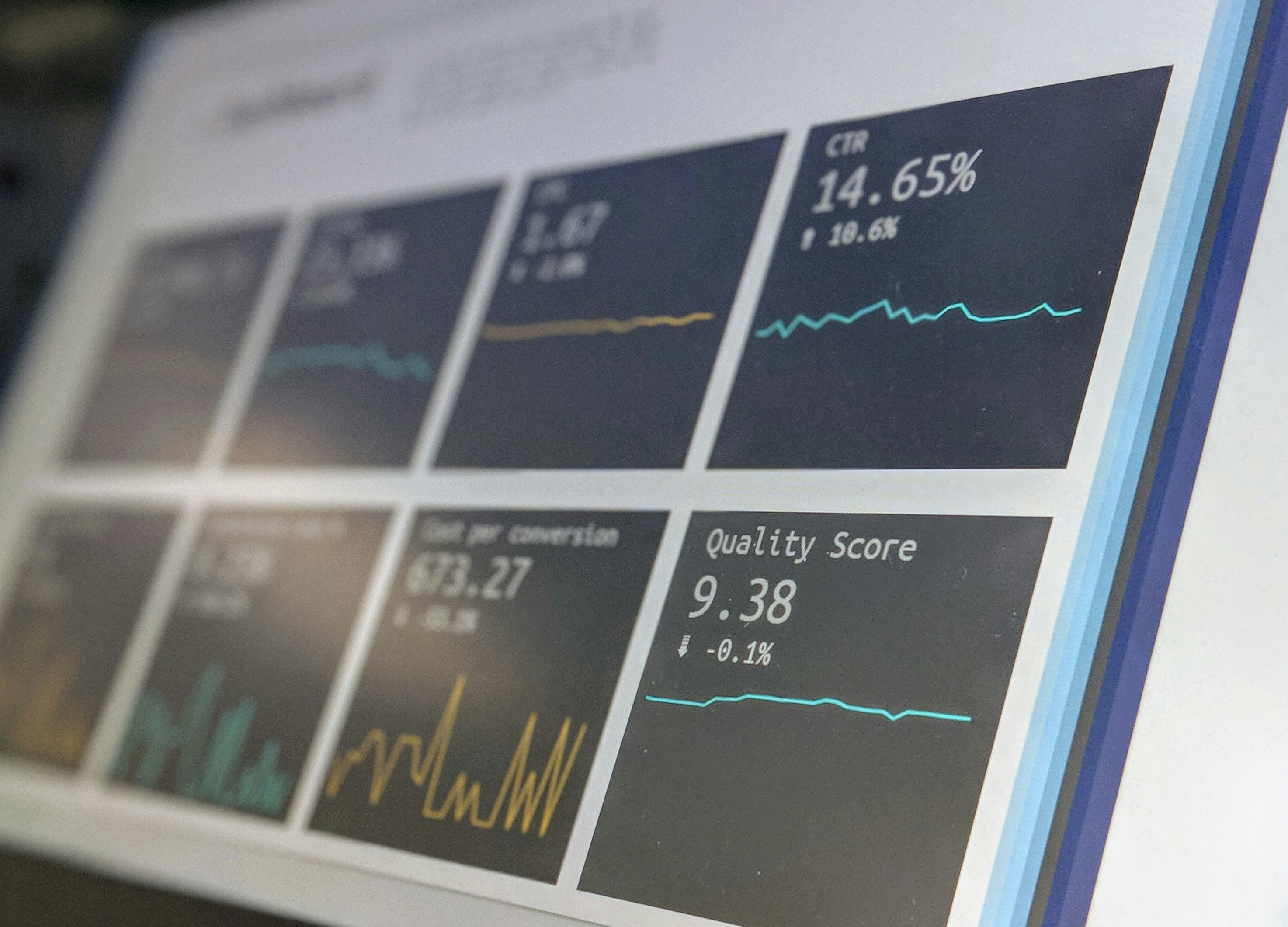
Everyone measures CTR, CPC and CPA. Almost nobody measures ad fatigue as a top-level KPI.
Fatigue is measured with a combination of signals:
- Average frequency per user: if it rises above 4 without your CPA improving, you’re saturating.
- Declining CTR within the same audience: if day 7’s CTR is less than half of day 1’s, rotate the creative or lower the frequency.
- Negative feedback (hidden ads, “not interested”): any sustained rise should trigger an alert.
Measuring fatigue isn’t optional if your monthly paid media budget exceeds COP 5,000,000. Above that threshold, the difference between remarketing that builds the brand and remarketing that destroys it becomes quantifiable in pesos.
How to implement it on Google Ads
Google Ads has four main remarketing tools. I’ll explain how to apply the 7 principles to each one. If you need help, see our Google Ads service.
Display remarketing (the most used and the most abused)
The Google Display Network is where most advertising harassment happens. It’s also where ethical remarketing works best, because you have granular control over audiences, frequency and exclusions.
Setup by intent (not by visit):
Don’t create a single “all visitors” audience. Create at least three:
- Visitors to a specific product/service (more than 30 seconds on the page)
- Visitors to the blog or educational content (readers, not buyers — content goes here, not offers)
- Abandoned carts or started forms (maximum intent, deserves an offer)
A mandatory frequency cap:
In each Display campaign, set a frequency cap consistent with principle 3: for example, 1–2 impressions per user per day with a weekly ceiling of around 5–7. You’ll find it in the campaign’s frequency settings. If you’ve never touched it, you’re probably running without a limit, which is precisely the problem.
Creative rotation:
Don’t use the same banner for more than 7 days in a row. Google Ads lets you set rotation to optimize automatically, but make sure you have at least 3 active variations. Ideally:
- Creative 1: a reminder of the product/service (who you are, what you solve)
- Creative 2: social proof (testimonials, cases, numbers)
- Creative 3: an offer or legitimate urgency (a real discount, limited places, a closing date)
Excluding people who have converted:
Create a “converted” list (people who reached your thank-you page, purchase confirmation or similar) and add it as an exclusion in ALL your remarketing campaigns. It takes 2 minutes to set up and saves you months of burning out customers.
RLSA (Remarketing Lists for Search Ads)
RLSA lets you adjust your bids and ads on the search network depending on whether the person has already visited your site. It’s less intrusive than Display because the user is already actively searching.
The key here is not to treat someone who knows you the same as someone who doesn’t. If someone has already visited your site, raise the bid by 20–30% because they’re a warmer lead. But adjust the ad copy: acknowledge that they already know you. A headline like “The digital marketing agency you already know”, with a price extension or a success story, works much better than a generic ad.
Dynamic remarketing
This is the remarketing that shows the exact product the person viewed. Powerful, but dangerous if it isn’t properly calibrated.
Rules for ethical dynamic remarketing:
- A limited time window: if the product sells in short cycles (fashion, technology), remarket for 7 days at most. If it’s a B2B service, 30 days.
- Don’t show products already bought: integrate the feed with your sales system to exclude what has already been purchased. Showing someone the same air conditioner they installed last week is the definition of money thrown away.
- Complement, don’t repeat: if they looked at a specific product, show them complementary products as well as the original. Subtle cross-selling, not single-minded harassment.
YouTube remarketing
People who watched your video (or part of it) are one of the most valuable audiences for remarketing. They’ve already given your content their attention.
But the typical mistake is interrupting their next video with a direct-sales ad. Instead, create a sequence:
- Video 1, which they watched (valuable content)
- A remarketing ad: a related video that goes deeper into the topic (it doesn’t sell)
- The next touchpoint: Display or RLSA with a concrete offer
YouTube is a trust-building channel. If you use it as a direct-sales channel in remarketing, you’re wasting its potential.
How to implement it on Meta Ads
Meta (Facebook and Instagram) handles remarketing with three types of custom audiences that are brutally effective if you set them up thoughtfully. See also our guide to Meta Ads for companies in Colombia.
Custom Audiences from your website
The Meta Pixel is the equivalent of the Google tag. The difference is that Meta enriches that data with behavioral signals on its platforms, which is powerful but also more intrusive if you don’t limit it.
Segmentation that works on Meta:
- Visitors from the last 7 days (maximum freshness, recent intent)
- Visitors from the last 30 days (educational content, not direct sales)
- Visitors to pricing or “hire us” pages (purchase intent — this is where you push)
- Blog visitors (nurturing, not sales)
The classic Colombian mistake is creating ONE “all visitors in 180 days” audience and firing the same offer at everyone. That isn’t remarketing. It’s noise.
Frequency on Meta:
Depending on the campaign type, Meta lets you control frequency. For remarketing, in our experience the sweet spot in the Colombian market is around 1–2 impressions per day, with a ceiling of 4–5 a week. Beyond that, users start reporting your ad.
A metric few people look at: Meta’s quality ranking. If your remarketing ad has a low quality ranking, it isn’t just a creative problem: the audience is rejecting it. Rotate the creative or reduce the frequency before Meta punishes you with higher CPMs.
Custom Audiences from engagement
People who interacted with your Facebook page or Instagram profile are pure gold for remarketing. They’ve already raised their hand to say “this brand interests me”.
Create separate audiences for:
- People who liked or commented (low engagement, valuable content)
- People who shared or saved (high engagement, they deserve an offer)
- People who sent a message (maximum intent, an absolute priority for sales)
- People who watched 50% or more of your video (real attention, a content sequence)
Each one receives a different message. Someone who only liked a post isn’t ready to buy. Someone who wrote to you on Messenger probably is.
Custom Audiences from a customer list
If you have a customer database (ideally in a CRM, but a decent spreadsheet works too), you can upload it to Meta — with your customers’ consent — and create audiences to:
- Exclude current customers from acquisition campaigns (principle 4 of the framework)
- Create lookalike audiences based on your best customers to find new ones
- Remarket to inactive customers with reactivation offers
Uploading your customer list to Meta takes 5 minutes. Not doing it costs you thousands of pesos in ads shown to people who shouldn’t see them.
WhatsApp + remarketing: the channel everyone in Colombia ignores
Colombia is one of the countries with the highest WhatsApp penetration in the world: the vast majority of internet users use it actively. Yet almost no Colombian company is using WhatsApp as a remarketing channel.
And that’s a monumental mistake.
The WhatsApp Business Platform lets you send messages to users who have already interacted with your business and agreed to hear from you, with open rates far higher than email marketing. It isn’t cold: the person already knows you, has already visited your site and has already shown interest.
How to integrate it without being intrusive:
- The user visits your site, and the Meta Pixel or Google tag records the visit
- If they haven’t converted after X days, instead of another Display banner they receive a WhatsApp message (with prior opt-in, of course)
- The message isn’t “we’re waiting for you” or “don’t abandon your cart” with 14 emojis. It’s: “Hi [name], I saw you were looking at [product/service]. Can I help you with any questions? No obligation.”
- On the other side there’s a human (or a well-trained chatbot), not an automation that spits out links
At Gulupa Digital we’ve tested this integration with clients in Medellín, and the results are consistent: remarketing via WhatsApp converts several times better than traditional display in those cases, precisely because it doesn’t feel like an ad. It feels like a service.
The critical difference is consent and usefulness. If the person left their number voluntarily (a started checkout, a contact form, a WhatsApp widget on the site), the follow-up message is expected. If they never gave their number and you write to them anyway, that’s spam — and it’s also illegal.
Frequently asked questions
How much does remarketing on Google Ads and Meta Ads cost in Colombia?
It depends on your industry, the competition and the size of your audience. As an indicative reference, Google Display CPMs in Colombia are often in the range of COP 3,000–8,000, while on Meta Ads they can range from COP 2,500–6,000. Remarketing is usually cheaper than cold prospecting because the audience is smaller and more qualified. A monthly budget of COP 500,000 to COP 1,500,000 for remarketing alone is a reasonable starting point for a Colombian SME, but companies with more traffic need larger budgets to avoid quickly saturating a small audience.
Does remarketing work for B2B companies in Colombia, or only for ecommerce?
It works for both, but with different tactics. In B2B the purchase cycle is longer (weeks or months), so remarketing should be more spaced out and based on valuable content, not direct offers. An industrial company in Medellín, for example, should remarket with case studies, whitepapers and demonstrations, not discounts. The audience window is also wider: 90–180 days in B2B vs. 7–30 days in ecommerce. The key in Colombian B2B is not to rush the prospect before their internal decision process has matured.
How do I know whether my remarketing is working or annoying people?
Three metrics tell you without a doubt. First, CTR: if it falls consistently, campaign after campaign, with the same audience, there’s fatigue. Second, average frequency: if it exceeds 5 impressions per user per week, you’re on the edge of harassment. Third, negative feedback (“hide ad” or “not interested”): a sustained rise is an alarm. If your CPA doesn’t improve while frequency rises, you aren’t optimizing; you’re insisting.
Can I do remarketing if my website has little traffic (fewer than 1,000 visits a month)?
You can, but with limitations. Both Google and Meta require a minimum number of users in your remarketing lists before campaigns can serve (Google, for example, requires at least 100 active users in the last 30 days for Display). With fewer than 1,000 monthly visits, your remarketing audiences will be very small and will saturate quickly. In these cases, it’s better to focus the budget on generating more traffic first (SEO, content, prospecting campaigns) and activate remarketing once the audience grows. Or use a wider time window (90–180 days) to accumulate more users.
Is WhatsApp remarketing legal in Colombia?
Yes, as long as you have prior consent. The data protection law (Law 1581 of 2012) and WhatsApp Business policies require the user to have opted in to receive messages from you. You can’t scrape numbers from public sources, you can’t buy databases and you can’t message someone just because they visited your site if they never voluntarily gave you their number. Consent must be explicit: a checkbox on your form, a confirmation in the WhatsApp widget or clear acceptance when starting the chat. Done correctly, WhatsApp remarketing is legal, effective and much better received than banners.
How often should I rotate remarketing creatives?
For the same audience, rotate creatives every 7–10 days at most. Ideally, have 3–4 variations active at the same time and let the algorithm optimize which to show. On Meta, watch the signals that indicate when a creative is starting to decline. On Google Display, use even rotation for at least 2 weeks before switching to automatic optimization. If your audience has fewer than 5,000 users, rotate more often because saturation arrives sooner.
Are your ads doing more harm than good?
Most Colombian companies doing remarketing are leaving money on the table — and worse, eroding their brand — without knowing it. Not because remarketing doesn’t work, but because nobody told them there was an ethical, profitable and sustainable way to do it.
At Gulupa Digital we manage Google Ads and Meta Ads campaigns for companies in Medellín and across Colombia, applying exactly this framework. We don’t chase your customers. We accompany them to the purchase with the right message, at the right moment, without poisoning your brand. Learn about our integrated digital marketing approach.
If you’re investing more than COP 3,000,000 a month in digital paid media and don’t have clear visibility into your frequency, audience fatigue or negative feedback, book a free audit of your campaigns. We’ll show you exactly where the leak is and how to fix it.
See how we manage Google Ads with traceability and data-driven optimization →
Or manage your social media advertising with a strategy for each stage of the funnel →