Does your brand show up on Google… but when people ask ChatGPT, Perplexity or Gemini, the recommended “expert” is your competitor?
That’s already happening in Colombia. And it hurts more than losing a position on Google, because users don’t even see a list of 10 results: they see one answer. If you aren’t mentioned there, you’re invisible.
GEO (generative engine optimization) is the new game: how you get generative engines (LLMs) and AI-powered search to cite you, recommend you and use you as a source. No hype, with method and with a real impact on sales.
A quick definition (to quote): GEO in digital marketing (ranking in LLMs) is the optimization system that gets your brand mentioned and cited when a generative engine answers a question in your market.
And yes: it coexists with SEO. It’s just that now you also compete to be the answer, not only for the click.
At Gulupa Digital we’ve been building digital assets with measurement since 2016 (websites, SEO, ads and demand generation). The point here is simple: if you can’t prove who you are and what you know, AI won’t “choose” you.
GEO explained without dictionary definitions
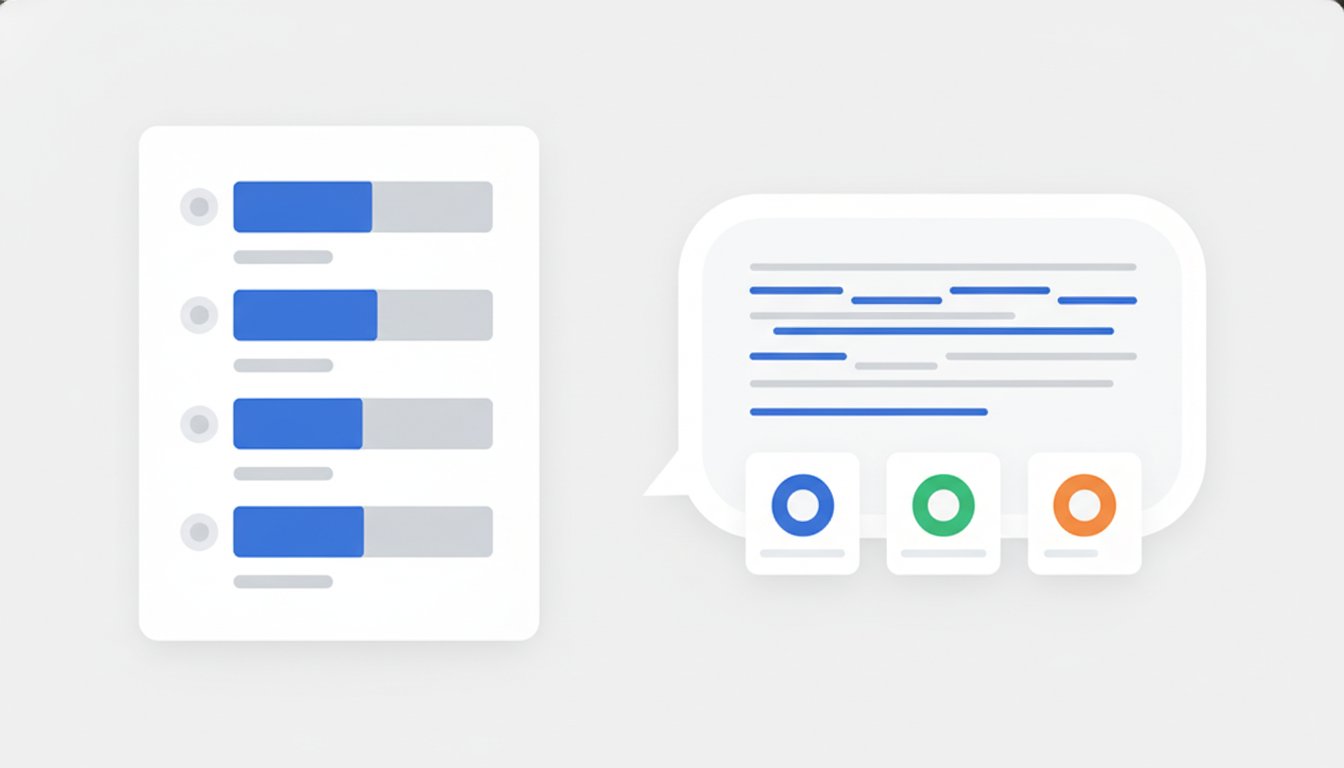
GEO in digital marketing is the set of tactics that gets a brand selected and cited by generative engines (LLMs) and experiences such as AI Overviews when they answer questions in the market.
In classic SEO, you fight for clicks. In GEO, you fight to be part of the answer.
To keep it from staying abstract, consider this difference:
| Discipline | Goal | Sign of success | Typical risk |
|---|---|---|---|
| SEO | Appear in the results (SERP) and win the click | More impressions/clicks, better positions | Traffic without intent / content made “to rank” |
| AEO | Be the answer in snippets/assistants | Featured snippets, direct answers | Generic answers without a brand |
| GEO (ranking in LLMs) | Be cited/recommended by generative engines | Brand mentions + citations + better-informed leads | Being summarized… while the competitor is recommended |
Why is it different?
- Because the model doesn’t “browse” like a human. It summarizes.
- Because it doesn’t reward keywords alone; it rewards consistency, evidence and structure.
- Because a mention in an AI answer can skip your whole funnel (for better or worse).
For an SME in Colombia, the opportunity is clear: if your competitors still live in 2018 (“let’s just post”), you can win 2026 with a digital presence designed to be citable.
If you’d like us to check whether your site is ready for GEO (technical + content + authority), see our SEO approach.
What changed in 2026: from “ranking” to “recommendation”
User behavior changed: people ask more and read less. And search engines became “assistants”.
In practice, this has three business effects:
- Fewer clicks, more influence. You can lose traffic and still win sales if you’re cited where the decision is made.
- The brand rules again. When two companies offer the same thing, the engine tends to cite the one with clear signals: a consistent name, proof, topical coverage, third parties talking about it.
- Loose content dies. Isolated articles without structure, author, examples, data or an “entity” behind them become material for others to win.
This doesn’t mean “SEO is over”. It means the SEO that worked by inertia is over.
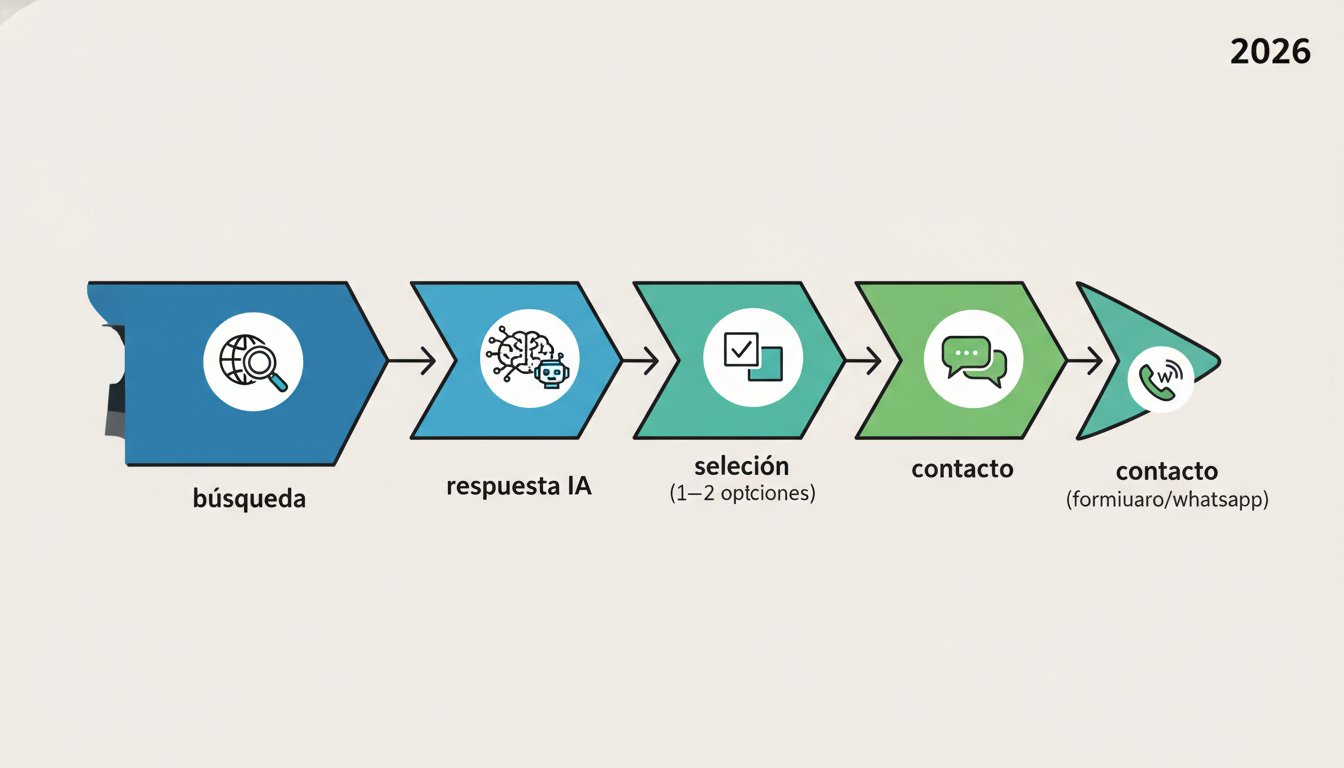
The GEO framework you can actually execute (6 layers, one goal)
At Gulupa Digital we work on it as a system. Not as “install a plugin and pray”.
Layer 1: Entity (who you are), so the engine doesn’t confuse you
If your company is called “Comercializadora ABC S.A.S.” at the Chamber of Commerce, “ABC Comercial” on Instagram, “ABC Colombia” on the website and the email says something else… the engine has a problem: it doesn’t know whether you’re the same entity.
A quick checklist:
- Legal name and trade name defined (and consistent).
- Consistent NAP: name, address, phone on the website, directories and profiles.
- An “About us” page with a real history, team, location, coverage and social proof.
- A clean “Contact” page (no friction), with a working form and visible WhatsApp.
It seems basic. Almost nobody does it well.
If your “entity” is a jigsaw puzzle today, write to us and we’ll sort it out with a diagnosis.
Layer 2: Owned assets (where you control the message)
LLMs feed on sources. If your main source is an Instagram account with posts from 2022, you’re asking to lose.
Assets that are worth it in 2026:
- A fast, stable, crawlable website (real technical SEO).
- A blog with coverage by intent (not by “nice topics”).
- Service pages that explain what you do, for whom, how it’s measured and how it’s bought.
- Case studies or evidence (even in a simple format).
GEO is best built on a site that’s already organized for SEO. That’s why at Gulupa we work on SEO + GEO as a single discipline.
If your website is “pretty but mute” today (it doesn’t measure, rank or convert), start by putting the asset in order: digital marketing.
Layer 3: “Citable” content (answers, not filler)
A generative engine cites what it can turn into an answer.
If your content is full of generic phrases (“the importance of…”, “now more than ever…”), the model finds nothing useful to cite.
Citable content can be recognized by:
- Operational definitions: “GEO is X when Y happens”.
- Short lists with judgment (not lists of 30).
- Local examples (Colombia, industry, real constraints).
- Numbers or ranges with context (without turning them into a price list).
- Step-by-step instructions someone can execute.
A practical trick: write blocks that answer questions as if they were answer fragments. If you can copy and paste it as a direct answer, you’re close.
[Concept] is [a one-sentence definition]. It’s implemented with [3 steps] and measured with [2 metrics].
Layer 4: Structure (so the machine can read it without guessing)
A large part of “ranking in LLMs” is won here: making extraction easy.
Actions that usually move the needle:
- Clear headings (H2/H3) with real questions.
- FAQ sections with direct answers.
- Simple tables when there are comparisons.
- A short glossary if the topic is technical.
- Structured data (schema) where applicable.
A useful source (for the technical team): Google’s documentation on structured data.
Layer 5: External authority (third parties talking about you)
Models trust you more when third parties validate you.
For a Colombian SME, “external authority” doesn’t have to mean national press. It can be:
- Partnerships with chambers of commerce/trade associations (mentions on real sites).
- Cases with recognizable clients (with permission + evidence).
- Participation in industry events (and having it published).
- Serious directories with a complete listing (not spam).
The goal: for your brand to exist in more places than your own site, with consistent information.
Layer 6: Measurement (without it, everything is opinion)
GEO without measurement becomes “I think that…”.
Practical indicators for SMEs:
- Search Console: growth in branded queries + impressions on guide pages.
- GA4: leads attributable to organic + assisted conversions.
- Growth in branded searches (the trend, not surgical precision).
- Controlled tests in generative engines: the same 20 questions every month, with the same location/language.
If there’s no dashboard, there’s no control. For a closer look at measurement, see how to measure your company’s visibility in AI.
How to implement GEO in a Colombian SME (a realistic 30-day plan)
You don’t need “an AI lab”. You need order.
Week 1: Pin down your “entity kit”
Deliverables:
- A simple document with: trade name, legal name, a one-line description, services, industries, city, coverage, differentiator.
- Updated “About us” and “Contact” pages.
- A footer with consistent NAP.
What usually blocks SMEs: the brand is “split” between marketing, management and sales. That gap can be closed in a week if someone decides.
Week 2: Fix the technical issues that make AI ignore you
Without getting paranoid, there are basics that leave you out:
- A slow site (poor Core Web Vitals) → crawling becomes expensive.
- Inconsistent indexing → key pages left out of the index.
- Badly set canonicals → duplication, confusion.
- Content without hierarchy → everything looks the same.
Deliverables:
- A short audit: what gets indexed, what doesn’t and why.
- Quick fixes: titles, headings, basic internal linking.
If you have a technical team, add this extra without going crazy:
- An llms.txt file and/or clear crawling policies (where applicable) to reduce ambiguity.
- A clean, up-to-date sitemap.
Week 3: Create 2 “pillar” pieces and 6 citable blocks
A pillar piece isn’t long for sport: it covers the topic with judgment.
For GEO, the format that works best is:
- Pillar guide (1): “how to choose / how to implement / how to compare”
- Pillar guide (2): “mistakes + checklist + examples”
Within each one, create citable blocks:
- An operational definition (2–3 lines).
- An implementation checklist.
- A mini FAQ (5 real questions).
This feeds SEO and feeds “ranking in LLMs”. Two birds, one execution.
Week 4: Reputation and distribution (without turning it into a circus)
GEO is also distribution. Content that only lives on your blog is like opening a shop in the desert.
Healthy actions:
- Post a summary on the company leader’s LinkedIn (with a link to the guide).
- Turn the guide into a simple PDF for partners (without spending 2 weeks designing it).
- Ask for 3 real mentions: suppliers, partners, clients (where it makes sense).
Your goal here isn’t “going viral”. Your goal is to increase the likelihood that, when an LLM “looks for sources”, it finds you in more than one place.
If you want us to build this plan with you (and execute it with measurement), see our SEO positioning service.
GEO tactics that are worth the effort (and what they look like in real life)
1) Service pages that answer objections (without selling like a market trader)
In Colombia, the typical friction is: “How much is it?”, “How long does it take?”, “How do I know it works?”, “What do I have to provide?”.
A strong service page answers that with structure:
- What’s included (by results, not an endless checklist).
- What’s not included (to avoid phantom expectations).
- How it’s measured.
- What you need from the client.
- Frequently asked questions.
If your page says “we’re the best” today, the generative engine has nothing to cite.
2) Basic schema that reduces ambiguity
It’s a signal.
For most SMEs, these schemas already help:
- Organization / LocalBusiness (as applicable)
- WebSite + SearchAction
- Article (for the blog)
- FAQPage (only if the FAQ is real and visible)
3) A monthly “citability test” (20 questions, 30 minutes)
Build a list of 20 questions your customer would ask:
- “What’s the best SEO agency in Medellín for an SME?”
- “How do I know whether my SEO is working?”
- “What is GEO in digital marketing and ranking in LLMs?”
Every month, with the same language and location, ask 2–3 generative engines and record:
- Are you mentioned?
- Who is mentioned?
- Which sources are cited?
- What claims are being made about your industry (correct or dangerous)?
That tells you where you need to strengthen: content, reputation or clarity.
4) Real cases (even small ones) with an evidence structure
“We work with X” isn’t enough.
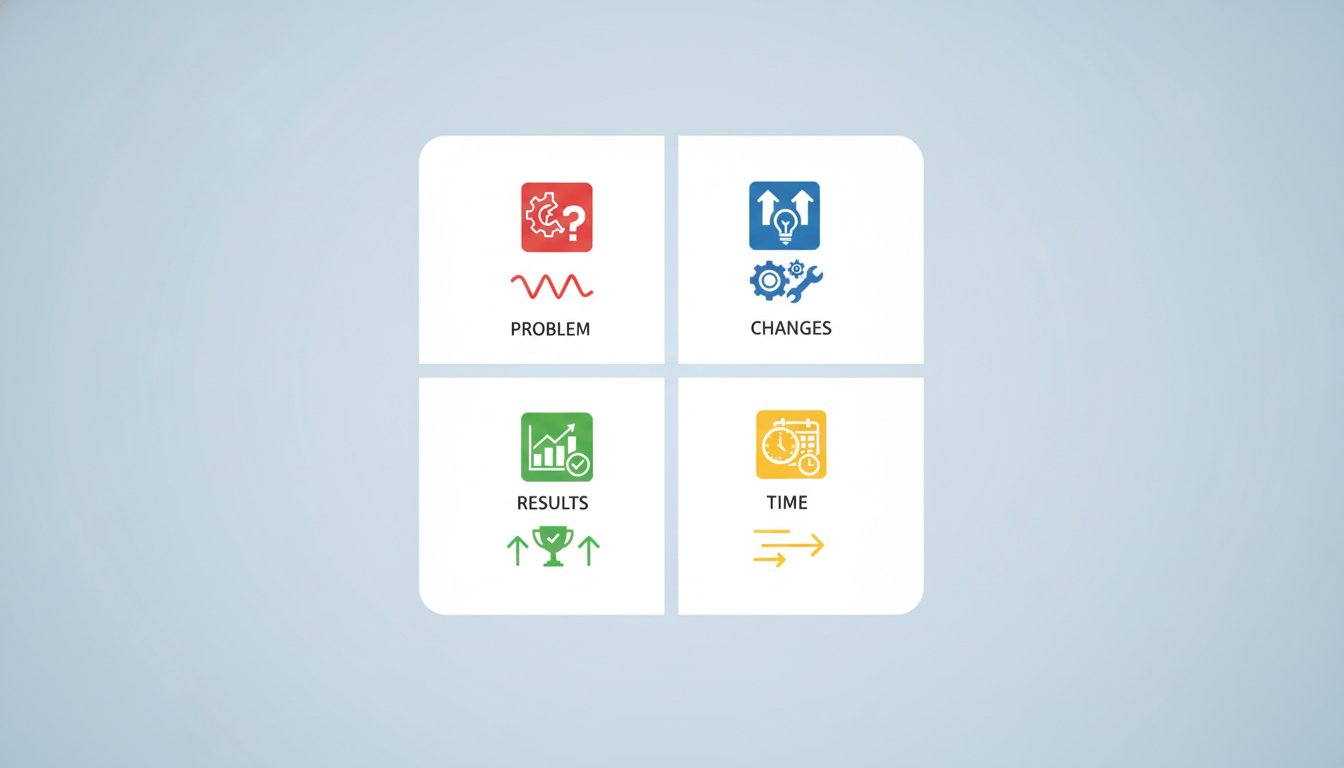
The minimum evidence for it to be useful:
- The problem (1 paragraph)
- What was changed (3–5 bullets)
- The result (a metric or signal: leads, conversion rate, prospect quality, lower CPC, etc.)
- The time frame (a range)
At Gulupa we’ve worked with large organizations (such as Atlético Nacional) as well as SMEs. The lesson is the same: without measurement, there’s no learning.
If you want your team to stop “making content” and start building measurable demand, see how we build an opportunity engine: lead generation.
Common GEO mistakes (the most expensive ones)
Believing GEO means “writing prompts”
If your strategy consists of asking an AI “how do I rank in AI”, you’re following someone else’s map.
GEO is won with assets, evidence and structure. Prompts help speed up production, not build authority.
Publishing “content for robots”
Inflated, repetitive texts with keywords forced in. The result: nobody reads it, nobody shares it, nobody cites it.
LLMs can summarize it, yes. The problem is that their summary sounds the same as that of 200 competitors.
Ignoring brand consistency
A different name on every network, outdated phone numbers, half-finished addresses, services described in 4 different ways. That kills citability.
Wanting external reputation in a week
Bought backlinks, junk directories, sponsored articles without judgment. It ends up being noise.
In Colombia, the most valuable reputation usually comes from:
- real partnerships,
- real clients,
- real participation,
- genuinely useful content.
Measuring “likes” instead of business
“A bot mentioned me” doesn’t pay the payroll.
If GEO isn’t connected to leads, meetings, sales or at least hard signals (branded searches, organic conversions), it becomes a hobby.
If you want to move from opinion to data, book a conversation.
GEO and SEO in Colombia: what it looks like in a company that wants to sell (not sound modern)
For an SME, the goal is never “to be in AI”. The goal is:
- for the right prospects to find you,
- for them to understand your offer without calling 5 times,
- for them to contact you with real intent.
When GEO is implemented well, practical things happen:
- Your service page answers objections and the conversion rate rises.
- Your content stops being “blog post after blog post” and becomes a system.
- Your salespeople receive better-informed leads (fewer “so what do you do?” calls).
That’s the point. See also: is AI recommending your company?
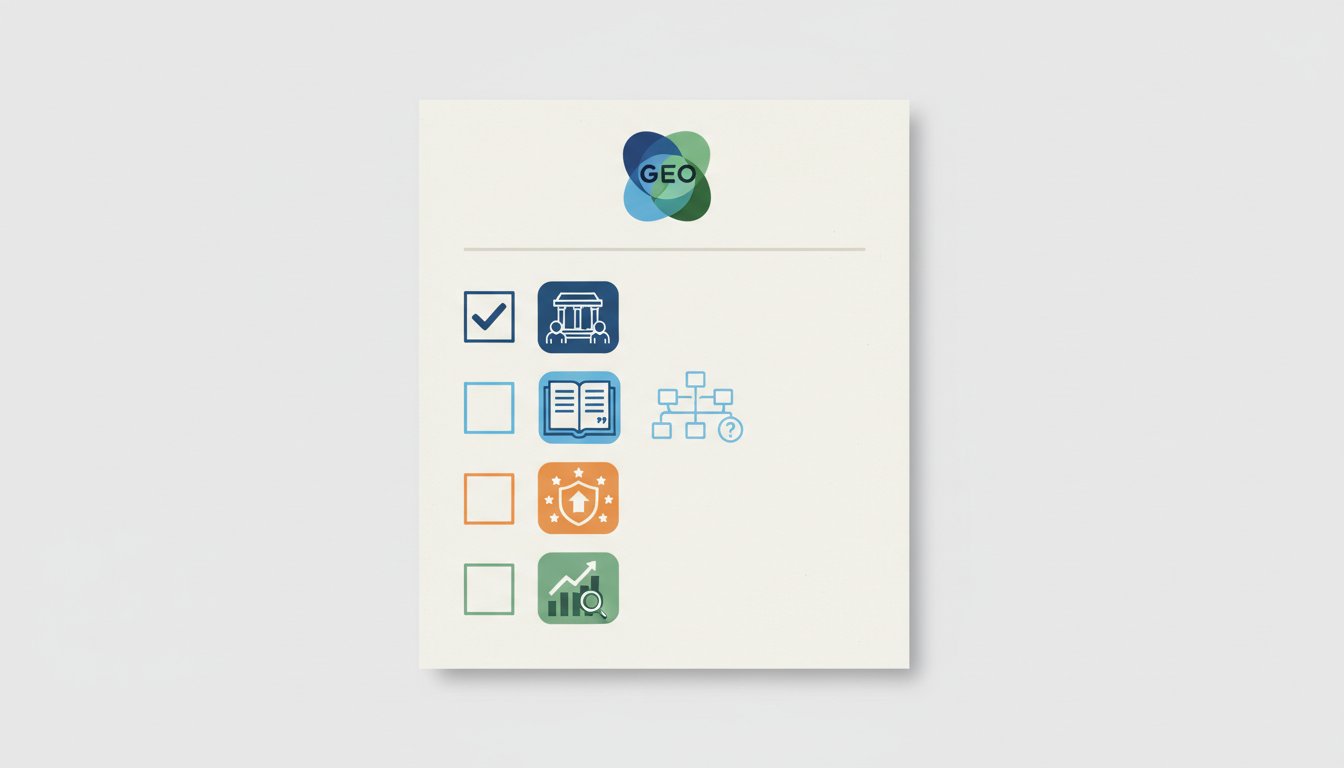
A quick GEO checklist (to use tomorrow)
- Is your brand described the same way on your website, Google Business Profile, LinkedIn and Instagram?
- Do you have a page that explains your offer with examples, measurement and an FAQ?
- Does your blog have guides that answer specific questions (and not just loose articles)?
- Does your site load quickly on mobile?
- Is there evidence (cases, testimonials, figures) that an engine can cite?
- Do you have 3 external mentions that aren’t “weird directories”?
- Do you run the monthly citability test and record the results?
If you answered “no” to more than 3, GEO is still a big opportunity for your brand.
Frequently asked questions (FAQ)
What does GEO mean in digital marketing?
GEO (generative engine optimization) is optimization so that generative engines (LLMs) and AI-powered search mention and cite your brand when they answer questions in your market.
Does GEO replace SEO?
No. GEO is best built when SEO is in good shape. SEO gives you crawling, indexing and authority on your site; GEO increases the likelihood of being recommended in answers.
What is “ranking in LLMs” and how is it achieved?
It’s increasing the likelihood of appearing cited or recommended by models such as ChatGPT or Gemini. It’s achieved with a consistent entity, citable content, structure (FAQ/schema) and external authority.
What are AI Overviews and why do they matter for GEO?
They’re AI-generated answers within the search engine that summarize and combine sources. They matter because they swap the “click” for influence: if your brand doesn’t appear as a source or entity, you can lose demand even if you keep “ranking”.
Do LLMs “read” my website in real time?
It depends on the engine. Some query the web with browsing and citations; others answer with trained models plus external signals. What is constant: if your entity and your evidence are confusing, your citability drops.
How long does it take to see anything with GEO?
It depends on your starting point. In SMEs with organized assets, signals usually appear within 30–90 days: more branded searches, better organic queries and more consistent mentions.
Which content works best for GEO in 2026?
Practical guides, comparisons with judgment, real FAQs, operational glossaries and cases with evidence. Content that answers specific questions earns more citability.
How do I measure whether my brand appears in AI answers?
Define 20 real customer questions, ask 2–3 generative engines every month and record mentions, cited sources and recommended competitors. Cross-reference that with Search Console and organic leads.
Which schema should I implement first for “SEO for LLMs”?
Start with what reduces ambiguity: Organization/LocalBusiness, WebSite and Article. Then use FAQPage only if the FAQ is visible and real (no inventing questions “for SEO”).
Do you want your brand to be cited (not ignored) in 2026?
If your company in Colombia depends on referrals or ads to survive, GEO is a lever for building organic demand with more control. It’s achieved with order, evidence and execution.
If you’d like us to review your case and tell you what to move first (technical, content or authority), write to us here.